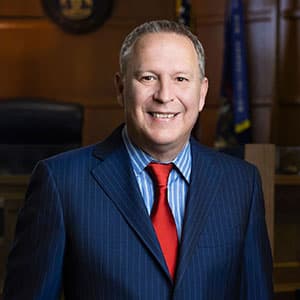
A DUI charge in Livonia, Michigan, can threaten your driving privileges, finances, and freedom. If you’ve been arrested for drunk or drugged driving, The David J. Kramer Law Firm can help. Our experienced DUI defense lawyer will analyze the details of your case to challenge the evidence and work toward the best possible outcome.
Don’t let one mistake ruin your future—call 248-348-7400 for a free consultation today.
What Happens During a DUI Arrest in Michigan
A DUI arrest can be overwhelming, especially for those who have never been in legal trouble before. Michigan has strict laws regarding driving under the influence, and even a first-time offense can lead to severe penalties. Understanding what happens during a DUI stop and arrest can help individuals make informed decisions and protect their rights.
The Initial Traffic Stop
Most DUI arrests begin with a routine traffic stop. Law enforcement officers may pull a driver over for a variety of reasons, including speeding, swerving, running a red light, or even a minor equipment violation like a broken taillight. In some cases, officers set up sobriety checkpoints where they stop drivers at random to check for signs of impairment.
Once a driver is stopped, the officer will observe their behavior and look for indications of intoxication. Slurred speech, bloodshot eyes, the smell of alcohol, or difficulty finding a license and registration may raise suspicion. If the officer believes the driver may be impaired, they will ask questions about alcohol or drug consumption and may request further testing.
Field Sobriety Tests and Preliminary Breath Tests
If an officer suspects impairment, they may ask the driver to step out of the vehicle and perform field sobriety tests. These tests are designed to measure coordination, balance, and the ability to follow instructions. Common field sobriety tests include:
The walk-and-turn test
The one-leg stand test
The horizontal gaze nystagmus test (tracking eye movement)
These tests are subjective, and many factors can affect performance, including medical conditions, anxiety, poor road conditions, or even the type of shoes a person is wearing.
In addition to field sobriety tests, the officer may administer a preliminary breath test (PBT) using a handheld device. This test provides a quick estimate of blood alcohol content (BAC). While a PBT result can be used as probable cause for an arrest, it is not the official test used in court.
Refusing a preliminary breath test for a non-commercial driver over the age of 21 is a civil infraction, resulting in a fine but not automatic license suspension. However, refusing a breath, blood, or urine test after an arrest carries much more severe penalties.
The Arrest and Transport to the Police Station
If the officer believes there is enough evidence of impairment, the driver will be placed under arrest for operating while intoxicated (OWI), commonly referred to as DUI in other states. The officer will inform the driver of their rights and transport them to the nearest police station or detention facility.
At this stage, the person under arrest will be asked to submit to a chemical test, typically a breathalyzer, blood test, or urine test. Michigan’s implied consent law requires drivers to comply with chemical testing once they are arrested. Refusing the test leads to an automatic one-year driver’s license suspension and six points added to the driving record, even if the person is not convicted of DUI.
If the chemical test confirms a BAC of 0.08% or higher, the driver will likely be charged with OWI. If the BAC is 0.17% or higher, enhanced penalties apply under Michigan’s “Super Drunk” law. Drivers under 21 can be charged with OWI if they have a BAC of 0.02% or higher.
Booking and Holding
After testing, the driver is booked into jail, where officers take fingerprints, photographs, and personal information. Depending on the situation, they may be held in a cell until sober or until bail is posted.
In some cases, a driver may be released on bond the same day or night. If there are aggravating factors, such as a high BAC, an accident, or a prior DUI conviction, they may remain in custody until a judge sets bail.
The Arraignment and Court Process
Within a few days of the arrest, the driver will have an arraignment in court. During this hearing, the judge will formally announce the charges and explain the possible penalties. The defendant will also have the opportunity to enter a plea of guilty, not guilty, or no contest.
For first-time offenders, the court may release the person with conditions such as not consuming alcohol or submitting to random testing. If the case involves repeat offenses or serious circumstances, stricter conditions may apply.
After the arraignment, the case proceeds to pre-trial hearings. During this stage, a defense attorney can negotiate with the prosecution, challenge evidence, and explore possible plea deals. If an agreement is not reached, the case may go to trial.
Potential Penalties for DUI Convictions
Michigan has strict DUI laws, and the penalties depend on factors such as BAC level, prior offenses, and whether anyone was injured. Common penalties include:
First offense: Up to 93 days in jail, fines of $100-$500, license suspension for up to 180 days, six points on the driving record, and possible community service.
Second offense (within seven years): Mandatory jail time of five days to one year, fines of $200-$1,000, a one-year license revocation, and vehicle immobilization.
Third offense (felony): One to five years in prison, fines up to $5,000, a five-year license revocation, and vehicle forfeiture.
For drivers with a BAC of 0.17% or higher, penalties increase, including longer license suspensions, higher fines, and mandatory alcohol treatment programs.
Defending Against Charges
A DUI charge does not automatically mean a conviction. There are many legal defenses that may help reduce or dismiss charges. A defense attorney can challenge the validity of the traffic stop, question the accuracy of field sobriety tests, and examine whether the chemical tests were properly administered.
Breathalyzers and blood tests are not always accurate. If the equipment was not calibrated correctly or the officer failed to follow proper procedures, the results may be unreliable. Additionally, medical conditions, diet, or medications can sometimes produce false positives.
The Importance of Legal Representation
Facing DUI charges in Michigan can be stressful and confusing, but having an experienced attorney can make a significant difference. A lawyer can negotiate for reduced penalties, challenge questionable evidence, and guide clients through the legal process.
The sooner a defense strategy is developed, the better the chances of achieving a favorable outcome. Even for first-time offenders, legal representation is essential to minimizing the impact of a DUI charge on their future.
David J. Kramer
Fight Back with an Experienced DUI Defense Attorney
A DUI arrest is serious, but understanding the process can help individuals take the right steps. Staying calm during the stop, being aware of legal rights, and contacting a defense attorney as soon as possible are critical. The consequences of a DUI conviction can be long-lasting, but a strong defense can help protect driving privileges and future opportunities.
The David J. Kramer Law Firm has defended clients against DUI charges in Livonia, Michigan, working to protect their rights and driving privileges. If you’ve been arrested for drunk or drugged driving, call 248-348-7400 for a free consultation and get the strong legal defense you deserve.
David Kramer was an excellent attorney! He did outstanding work on my son's case. He fought incredibly hard on our behalf, and his dedication, persistence, and commitment resulted in a very positive outcome. We cannot thank him enough for his efforts and support throughout the process. We are deeply appreciative of everything he did.
read moreread less
Carrie M.
This man went above & beyond even the most of basic expectations! Not only did he represent my ladies daughter; he refunded them? Like WTH man? That's incredible. Thank you ever-so-much! She couldn't believe you did that. You didn't have too! Best attorney in the area ... ever. Hands Down!
read moreread less
Steven M.
Dave was a great Attorney, easy to work with!
read moreread less
Brent T.
Excellent service with smooth and easy communication. Very professional and pleasant experience.
read moreread less
Nikhil A.
If you need a lawyer and do not call David you have made a mistake, this man deserves more then 5 stars, he absolutely knows his stuff and is very compassionate, competent, and professional from start to finish there is nobody better, I have had many lawyers in my life no need for a different one now this is the guy, thank you David for everything you did for my family I wish you nothing but the very best because that is what you are!
read moreread less
Adam B.
David Kramer is an outstanding attorney who truly goes above and beyond for his clients. When my spouse tried to take everything from me, David fought hard to protect my rights and made sure I received my fair share. He was professional, knowledgeable, and compassionate throughout the entire process. I’m so grateful for his dedication and expertise, and I highly recommend him to anyone who needs a strong advocate on their side.
read moreread less
John S.
I am so pleased with the service provided by Mr. Kramer and his team. David got the job done for me! After 15 years, he was able to get my driver's license back fully reinstated with no restrictions. He was worth every penny I spent! I can not express how much I appreciate his hard work and correct directions in pushing me forward to achieve this goal for myself. God bless Mr. Kramer and his team. They do a fantastic job. Thank You
read moreread less
Wendy S.
David Kramer is truly a lifesaver. David fought tirelessly to protect my family. He not only knew the law inside and out, but he also showed compassion, patience, and genuine care during one of the most difficult times in our lives. He explained every step clearly, kept me informed, and made sure we always felt supported. Thanks to his dedication and skill, my family and I are safe and secure today. I will be forever grateful for his help and would recommend him to anyone in need of a strong, trustworthy attorney.
read moreread less
Courtney B.
⭐ David Kramer – 5 Stars
I recently had the rare privilege of being represented by David J. Kramer, a legal mastermind whose reputation as a litigating god among mortals truly precedes him! Although he no longer takes on most family law matters, David made an exception in our case—which my wife, our family, and I are incredibly grateful for.
From the outset, David treated our situation with a level of respect, fairness, and care that's rarely found even among the closest of friends—let alone in legal counsel. He brought clarity to chaos, strategy to uncertainty. And when he identified an opportunity to strengthen our position, he immediately and personally brought in another seasoned attorney to ensure the best possible outcome.
That level of investment—financially and professionally—is something I’ve never seen from most people, and certainly never expected from my attorney.
Behind the scenes, someone very close to me helped bring this all together. Her network, encouragement, strength, insight, and hidden sacrifice made it possible to build the legal team that ultimately helped secure the result we’d been fighting for.
Thanks in no small part to David’s integrity, connections, reputation, and courtroom presence, we resolved a years-long conflict with a resounding win in a way that truly serves the best interest of my child—and did so with remarkable efficiency. He has my respect, undying friendship, and highest recommendation.
read moreread less
Josh L.
Let me tell you, this guy gets it done. Well worth the price! He sits down, consults, and sets the tone in court.
read moreread less
Andrew T.
I was being maliciously accused of aggravated domestic violence from my ex who lied about a serious injury she sustained while she was highly intoxicated. Kramer was extremely professional, dominated in the trial and got the case completely dismissed. He saved me from being falsely accused and I would recommend him to anyone needing help in what has been one of the most trying and devastating times in my life. I couldn't thank him or recommend him enough. Thank you David.
read moreread less
Michael L.
I was being maliciously accused of aggravated domestic violence from my ex who lied about a serious injury she sustained while she was highly intoxicated. Kramer was extremely professional, dominated in the trial and got the case completely dismissed. He saved me from being falsely accused and I would recommend him to anyone needing help in what has been one of the most trying and devastating times in my life. I couldn't thank him or recommend him enough. Thank you David.
read moreread less
Niko B.
Dave is nothing short of a magician when it comes to legal work. From the very beginning, he followed through on every promise he made. He gave me the best advice at every step and also negotiated my charges down to a very minor infraction — something I didn’t think was even possible.
His deep connections with judges and city attorneys were clearly evident, and it played a major role in the outcome of my case.
Hiring him was one of the best decisions I’ve made.
read moreread less
vikram s.
David’s expertise is above and beyond. He made everything very simple and gave peace of mind with his certainty. 10/10 recommend using David for his services
read moreread less
Matthew D.
Highly recommend Mr. Kramer. He was extraordinarily knowledgeable and responsive when helping me deal with a matter.
read moreread less
Garrett C.
I was extremely impressed with David Kramers expertise and professionalism. He is a good advocate to get the job done! He is very responsive and always answers calls and updates quickly.
read moreread less
Natalie P.
I hired David to represent me on two separate occasions in the past decade. I was very pleased with his efforts and the results on both occasions. He was able to ease my anxiety and worries over the situation and come up with a plan of action. He did everything exactly as he said he would and I could not have been happier with the result. Thanks again
read moreread less
David H.
Mr. Kramer was an amazing attorney for my husband. My husband was wrong accused and Mr. Kramer got the case dismissed. Thank you very much 🙏 We appreciate you and all the hard work you've done. I would recommend him to anyone who wants an honest attorney and an attorney thats work his butt off to make sure justice is done. Mr. Kramer works with us with prices as well, he is very affordable.
read moreread less
Robin H.
Very responsive. Keeps you in the loop as your case moves forward. Highly recommended. He really listen to me! He has the experience and knowledge that it will take to get the best positive outcome.
read moreread less
Jamie M.
I retained David Kramer for a CSC 3rd degree case. David Kramer was beyond in-depth when seeking to understand my situation. When was detained, he worked and got me a personal bond in which most cases don't happen. I was super grateful. He partnered with a colleague, Deanna Kelley, on my case. David and Deanna are the perfect duo. They're super detailed, and they both worked very, very hard. I was facing a 5-15 year prison sentence, but my case ended in an acquittal! They thoroughly exceeded my expectations and would definitely recommend his legal services for anyone that need it!! David, Deanna, my family, and I are more like family now!